|
Whether you're celebrating a special occasion, planning a romantic getaway, or simply seeking an unforgettable day out, Bloodwood Winery creates memories that will last a lifetime.͏ ͏ ͏ ͏ ͏ ͏ ͏ ͏ ͏ ͏ ͏ ͏ ͏ ͏ ͏ ͏ ͏ ͏ ͏ ͏ ͏ ͏ ͏ ͏ ͏ ͏ ͏ ͏ ͏ ͏ ͏ ͏ ͏ ͏ ͏ ͏ ͏ ͏ ͏ ͏ ͏ ͏ ͏ ͏ ͏ ͏ ͏ ͏ ͏ ͏ ͏ ͏ ͏ ͏ ͏ ͏ ͏ ͏ ͏ ͏ ͏ ͏ ͏ ͏ ͏ ͏ ͏ ͏ ͏ ͏ ͏ ͏ ͏ ͏ ͏ ͏ ͏ ͏ ͏ ͏ ͏ ͏ ͏ ͏ ͏ ͏ ͏ ͏ ͏ ͏ ͏ ͏ ͏ ͏ ͏ ͏ ͏ ͏ ͏ ͏ ͏ ͏ ͏ ͏ ͏ ͏ ͏ ͏ ͏ ͏ ͏ ͏ ͏ ͏ ͏ ͏ ͏ ͏ ͏ ͏ ͏ ͏ ͏ ͏ ͏ ͏ ͏ ͏ ͏ ͏ ͏ ͏ ͏ ͏ ͏ ͏ ͏ ͏ ͏ ͏ ͏ ͏ ͏ ͏ ͏ ͏ ͏ ͏ ͏ ͏ ͏ ͏ ͏ ͏ ͏ ͏ ͏ ͏ ͏ ͏ ͏ ͏ ͏ ͏ ͏ ͏ ͏ ͏ ͏ ͏ ͏ ͏ ͏ ͏ ͏ ͏ ͏ ͏ ͏ ͏ ͏ ͏ ͏ ͏ ͏ ͏ ͏ ͏ ͏ ͏ ͏ ͏ ͏ ͏ ͏ ͏ ͏ ͏ ͏ ͏ ͏ ͏ ͏ ͏ ͏ ͏ ͏ ͏ ͏ ͏ ͏ ͏ ͏ ͏ ͏ ͏ ͏ ͏ ͏ ͏ ͏ ͏ ͏ ͏ ͏ ͏ ͏ ͏ ͏ ͏ ͏ ͏ ͏ ͏ ͏ ͏ ͏ ͏ ͏ ͏ ͏ ͏ ͏ ͏ ͏ ͏ ͏ ͏ ͏ ͏ ͏ ͏ ͏ ͏ ͏
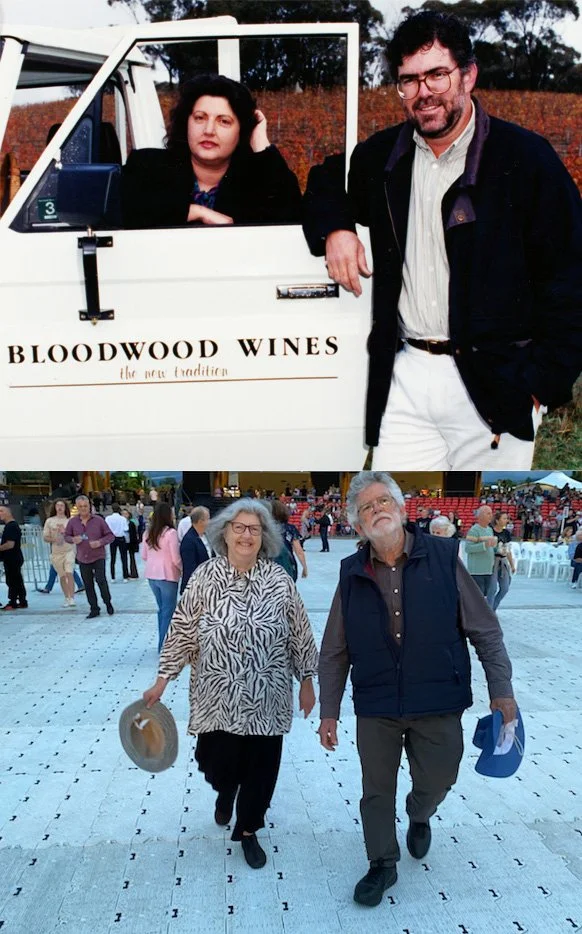
40 Years of Bloodwood
Then and Now
|
|
Share our exceptional vintages with those who mean the most to you.
|
|
If it’s good enough for The Beatles, it’s good enough for Bloodwood. To celebrate Bloodwood being half as old as Sir Paul McCartney we present a concert of priceless old favourites and new releases to keep your taste buds arockin’. Riesling 1 bottle of 2010 and 2 bottles of 2021 Schubert 1 bottle of 2010 and 2 bottles of 2021 Shiraz 1 bottle of 2009 and 2 bottles of 2018 Maurice 1 bottle of 2008 and 2 bottles of 2019 Then and Now offer $600 per case including freight unto your door. Be quick! It is limited to 24 cases only.A$600.00
|
|
|
__________________________The Why’s and Wherefore’s of Wine Diamonds
|
|
If you have ever been concerned about the presence of crystalline deposits in your wines, relax. In this game we call them wine diamonds and naturally occurring completely benign unstable tartaric acid is usually the culprit. Because their presence, particularly in white wines, causes not a little angst amongst punters, the majority of winemakers undertake the energy-intense and wasteful practice of cold stabilizing their white wines against tartrate deposition post-bottling. This usually requires refrigerating the wine to approximately half its alcoholic strength and holding it at that temperature for 10 days or so. For example, if you have a Riesling which is 12% alc/vol, it will need to be refrigerated and held at minus 6C for 10 days prior to sterile filtration, warming, and bottling. This is a very energy-intensive process and is why we here at Bloodwood require all our customers to have their own teeth.
|
__________________________Fighting inflation Bloodwood-style
|
|
|
Bloodwood Business Solutions (BBS) |
|
|
Attention all retail staff: We are all wanting inflation to behave itself and the interest rate medicine the Reserve Bank is using just doesn’t seem to be doing the job. So we here at Bloodwood, after deep investigation informed by real-world observation have come up with a surefire solution. To completely suppress all drunk button on-line purchases prior to Christmas, legislate that Optus is in charge of the interwebs, and to keep point-of-sale acquisitions within the Reserve Bank guard rails, each business will install the patented Bloodwood BS arachnid Eftpos until further notice. These restrictions will not apply to essential services, especially wine sales.
|
|
|
|
OPTUS - MAKING SMALL BUSINESS SMALLER!! |
|
|
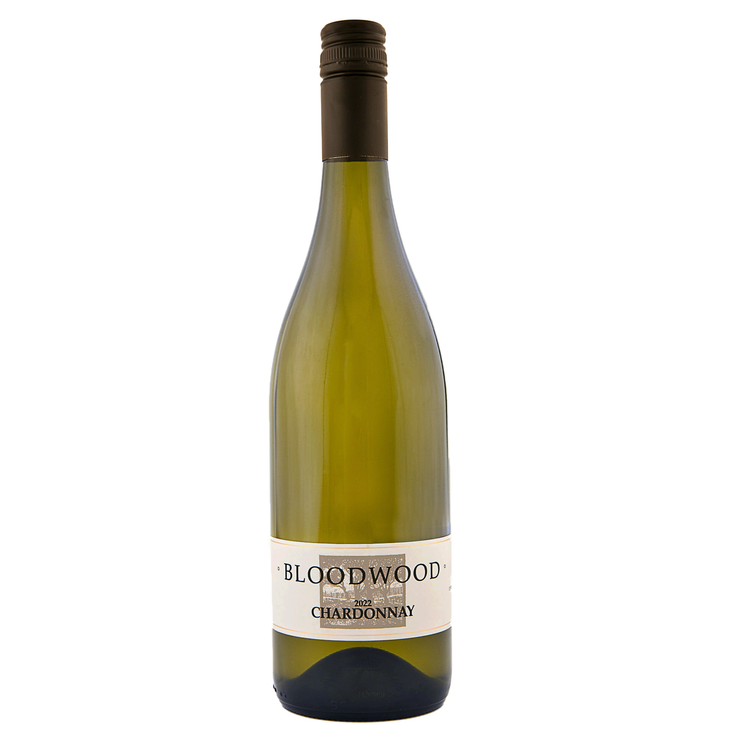
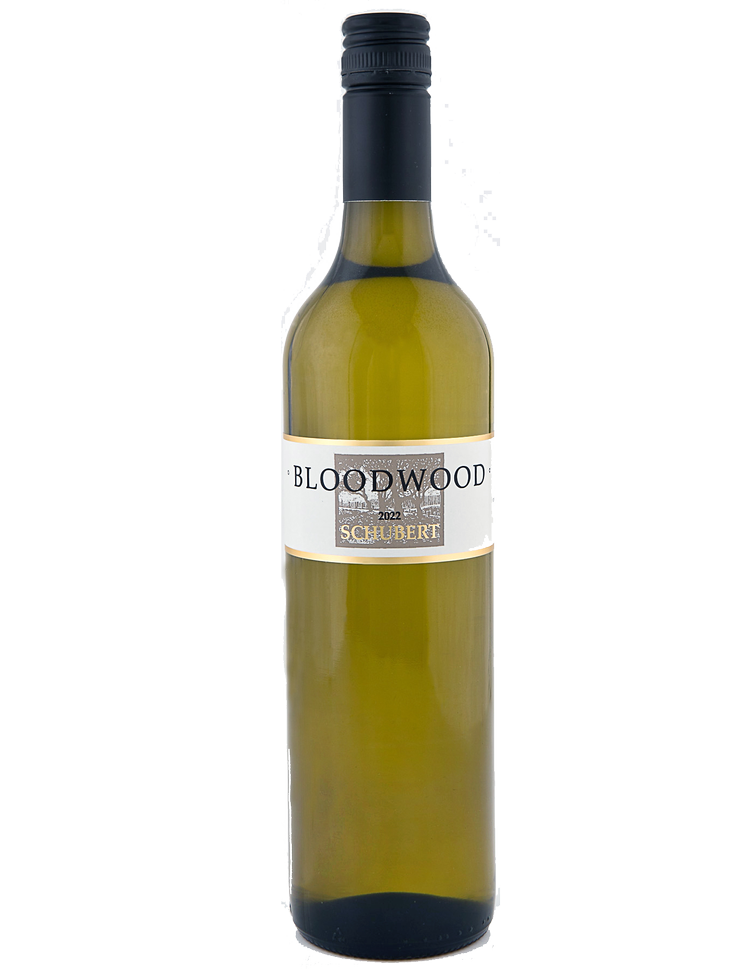
__________________________New New ReleasesThe response to our last announcement of the new release of our 21 Chardonnay and Schubert was so overwhelming that we have sold out. Who says Chardonnay is out of fashion? So, to celebrate with this newsletter, we would like to announce the New New Release of the 2022 Chardonnay and Schubert. They are both excellent examples of what the Bloodwood vineyard is capable of with Chardonnay and will not be new releases for long. This is what I reckon they taste like:
|
|
Bright green-gold in colour, this Chardonnay, through its honey dew melon and chalky aromatics, displays a mealy-textured, generously soft palate of nectarine and melon fruit notes. And yet, after all the subtle minerality and deliciousness so typical of our old Chardonnay vineyard, there remains a refreshingly bright presence at the absence of this wine. Al/Vol 12.8% A$456.00
|
|
|
|
Crisp green-gold in colour with an enticing bouquet of peach flower and gentle oak-infused citrus, this wine’s complex, mealy texture has been enhanced through gentle fermentation and maturation in fine quality 100% new French oak hogsheads. The brightly balanced, satisfying mouth-feel remains an emblematic element of the delicate power of this unique Bloodwood style. Medium term cellaring will only reward your patience. Al/Vol 13.0% A$500.00
|
|
|
__________________________John R Walker Art LaunchSunday 26/11/23 11 am @ BLOODWOOD Winetasting and Grazing Lunch under the gaze of Mount Canobolas The Orange Regional Art Gallery is currently exhibiting twenty years of John R Walker’s amazing landscapes. This inspired me to present for his supporters a Bloodwood Wine tasting with celebratory morsels as accompaniment. Given food and wine matching is my keen interest, I would like to share the menu for each of our dozen wines. If you are really keen on any of these recipes, just email me at rhonda.bloodwood@gmail.com Mature Sparkling 2010 Chirac (60% Chardonnay 40 % Pinot Noir)
Fried Korean rice paper & nori crisps, mashed broad beans, Kewpie mayo & smoked trout Whites 2021 Riesling
Chicken chipolatas with Dijon mustard 2022 Chardonnay
Caperberry Parmesan biscuit canapes 2022 Schubert Reserve Chardonnay
Duck dolmades Pink 2022 Big Men In Tights
Spinach & Meredith goat’s Feta pastries Elegant Reds (Pinot glasses here) 2017 Merlot Noir 2018 Pinot Noir
Patés of chicken liver & pepper and mushroom, on baguette toast Medium bodied reds 2018 Shiraz
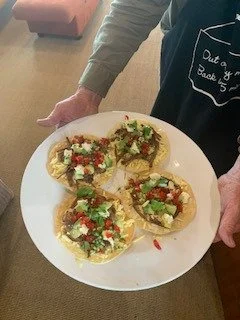
Beef brisket on corn Tostadas
|
|
Cabernets 2018 Bloodwood Cabernet Franc
2018 Bloodwood Cabernet Sauvignon
Lamburger with hummus, beetroot relish, green herb walnut sauce on a buttermilk bun 2019 Maurice
Cheese with French Bread Stick
2nd Mouse Cheese nine month Maurice
Roasted spiced hazelnuts Dessert 2022 Bloodwood Silk Purse
Strawberries with cream cheese Tea and Coffee
Plum and hazelnut cake Enjoy the terroir of Bloodwood by tasting one of every style we produce. We’ve packaged these together for you in the Bloodwood Distinctive Dozen __________________________
|
|
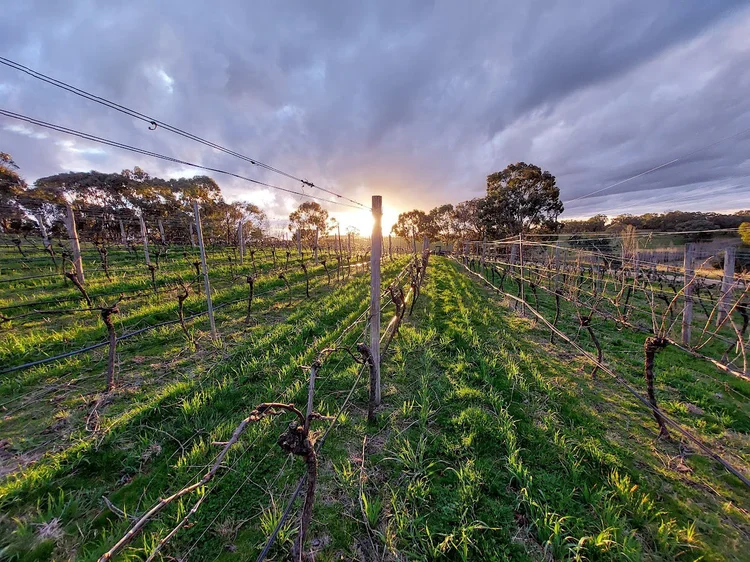
The weather at Bloodwood is always the same: It’s different! There has been long argument about the merits of irrigating wine grapes. Traditionally, in Australian terms, the quality of wine has been related to the use of irrigation. If your particular vineyard was irrigated, then your product was known as irrigated, and therefore, inferior. This caused wild fire in the bellies of various wine makers and consumers alike. You couldn't make good wine from irrigated grapes. Rubbish! This, of course, is almost as silly as saying that good wine is only produced from dryland fruit. From the growers point of view, being paid by weight, irrigation made a lot of sense. The practice of giving a vineyard a good old fashioned soaking just before vintage, meant that the grapes swelled as the vines pumped up the abundant moisture.
|
|
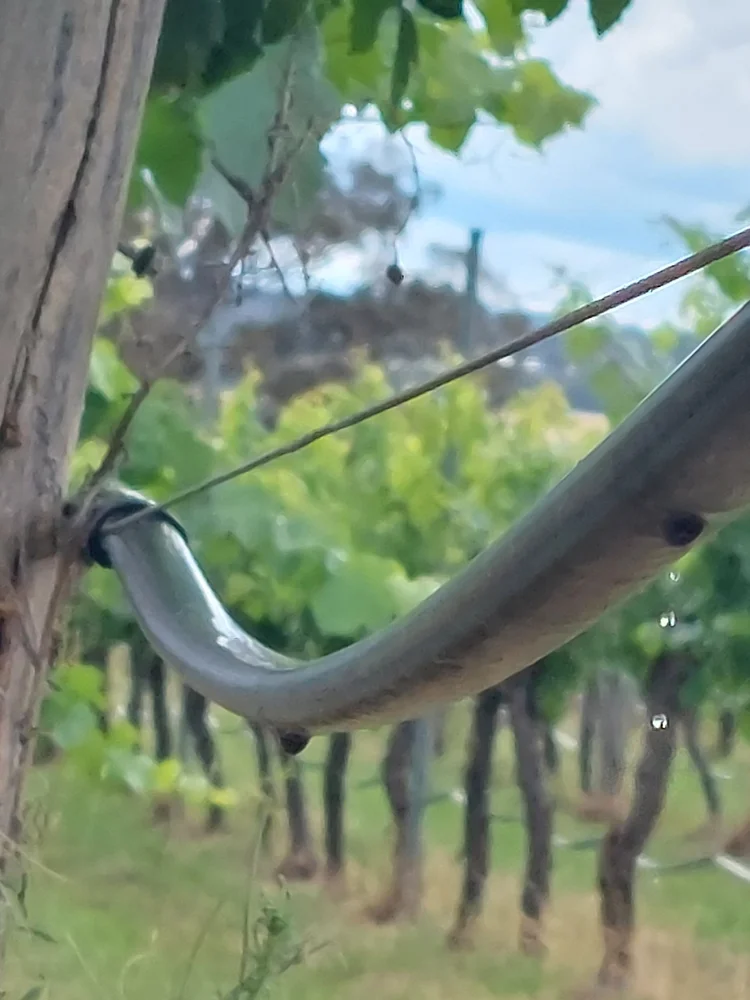
Was this another case of turning water into wine? From the wine makers point of view at least, it felt like a case of the grower turning water into wealth, a much more serious offence. So what is the real position? When it is all added up, it is simply a matter of grapes for the ground. A good vine will produce good fruit if it is happy. Grapes are a fruit crop, and like all fruit, even olives and dates, sufficient water during the growing season is essential to produce quality at harvest. Now, where the plant gets this moisture from, is really what the argument is all about. Grow your grapes in a deep clay loam in a winter rainfall region and provided the seasonal rain doesn't fail, your vines will be productive. Grow them in a summer rainfall area, again provided the rain doesn't fail, and you'll have a good crop of fruit. Disease may be a problem in the summer rainfall scenario, but all things being equal, the vines will still perform well enough. You can even turn on the tap. Irrigation, properly applied, is insurance against the variations in weather. And as anyone involved in agriculture these days will know, volatile variations in weather are rapidly increasing. A timely drink can make the difference between a successful crop, and an ordinary one. In extreme cases, it can make the difference between a vintage and no fun at all.
|
|
What happens if there is a shortage of water at critical growth phases, say, budburst or flowering or veraison. What can a grower of non-irrigated vines do? Ensuring a weed-free vinerow throughout the season will conserve valuable moisture. Mulching along that vinerow can also provide valuable organic material which will store more moisture where it is needed. It also adds considerably to the general microbiological activity and diversity of vineyard flora and fauna. And if it gets really dry, as it is as I write this in mid November 2023, you have two alternatives. Number one is to pray, but, at present, with the world the way it is, there’s a bit of congestion on the line. The second, if you don't get through, is as follows. Arrange for a delivery of household drinking water. This seldom fails. In Orange, if you have paid $$$ for a full tank of Suma Park Special, you can confidently pack away the sprinkler for the next few weeks… see, I was right!!!
|
__________________________Site it rightThere's an old adage concerning the selection of sites for the production of premium quality wine grapes. It goes something like this. "Where a tractor goes, there no vine should grow" While it's a fair bet that this particular aphorism wasn't coined by the marketing Messiahs of Massey Ferguson, it is odds-on that the development of narrow-wheel-based specialist vineyard tractors was, and is, a response to the particular needs of modern viticulture. These days, quality wine grapes are being grown in cooler areas.
|
|
As anyone who has recently been trying to buy a local block of dirt will confirm, it's an expensive exercise. This means that an investment in good viticultural ground, in our economy (sic), demands a quick capital return. To help achieve this, closer plantings, which make maximum use of available acreage, are popping up. There's also the sneaking suspicion that closer planting makes for better wine quality. This may occur because the increased competition between neighbouring vines restricts vigour through the creation of more stress.(Let's hear it for granny flats, condominiums and apartment blocks, I hear you say!) Our Continental friends, afflicted as they sometimes are by Gallic symmetry and Teutonic precision, like to plant their vines as close as a meter apart. This has meant a need for the development of machines able to straddle the vine row and capable of carrying out the frequent tasks of cultivation, spraying, leaf plucking and harvesting. Although we haven't had to go to these lengths to produce quality fruit here at Bloodwood, there is the need for very careful site selection when choosing a successful future vineyard, especially in the cooler, and more expensive local areas. There's a fair amount of science in good site selection. Aspect, temperature accumulation across the growing season, access to quality irrigation, well drained soils and relative freedom from exposure to damaging winds and frost pockets, all influence the success of the venture.
|
|
Even ignoring what is really the spine of site selection, that is, managerial competence, tourism potential, access to markets, possibility for growth and eventual resale value, there's a lot left to argue about. And a good argument is as invigorating as a good red to most vignerons. They positively enjoy slogging it out over temperature summations, frost-free periods and M.T.W.M'S, whatever they are. And then there’s the climate change elephant in the vineyard which tends to cloud most arguments in doubt and anxiousness. We used to debate fine tuning the margins, now we fear the basics of agricultural survival. Remember it’s a long and lonely business pruning vine after vine. Talking to plants is all very well in summer, but in winter, dormant vines are quite unresponsive. This gives we winegrowers so much time to develop potential arguments that casual conversations can quickly expand into quite vigorous dialogue at the drop of even the slightest climatic cliche. And that’s just talking to ourselves.. So be warned! There are, of course, exceptions, the most recent of which was an interruption by a winemaker from Beaune in France. After obviously ecstatic raving (a slight smile) about the extreme quality of our current vintage (zis is good), and an extensive investigation and approval of every aspect of our site selection (you vines zeem 'appy), she informed us that our gravelly loams were identical to those of the Cote-d'Or. Well, even with the most careful site selection, we can't be expected to get everything right. C'est la vine! _______________________________________ And a sincere thank you from Rhonda and Stephen for playing your important part at Bloodwood in 2023
|
|
|
|